Inherent FR vs Treated FR: Which Should You Buy?
Both protect. The difference is whether the protection is woven into the fiber or applied as a finish. Here is why that matters after the 50th wash.
September 4, 2025 · 6 min read · by Summit Work Apparel®
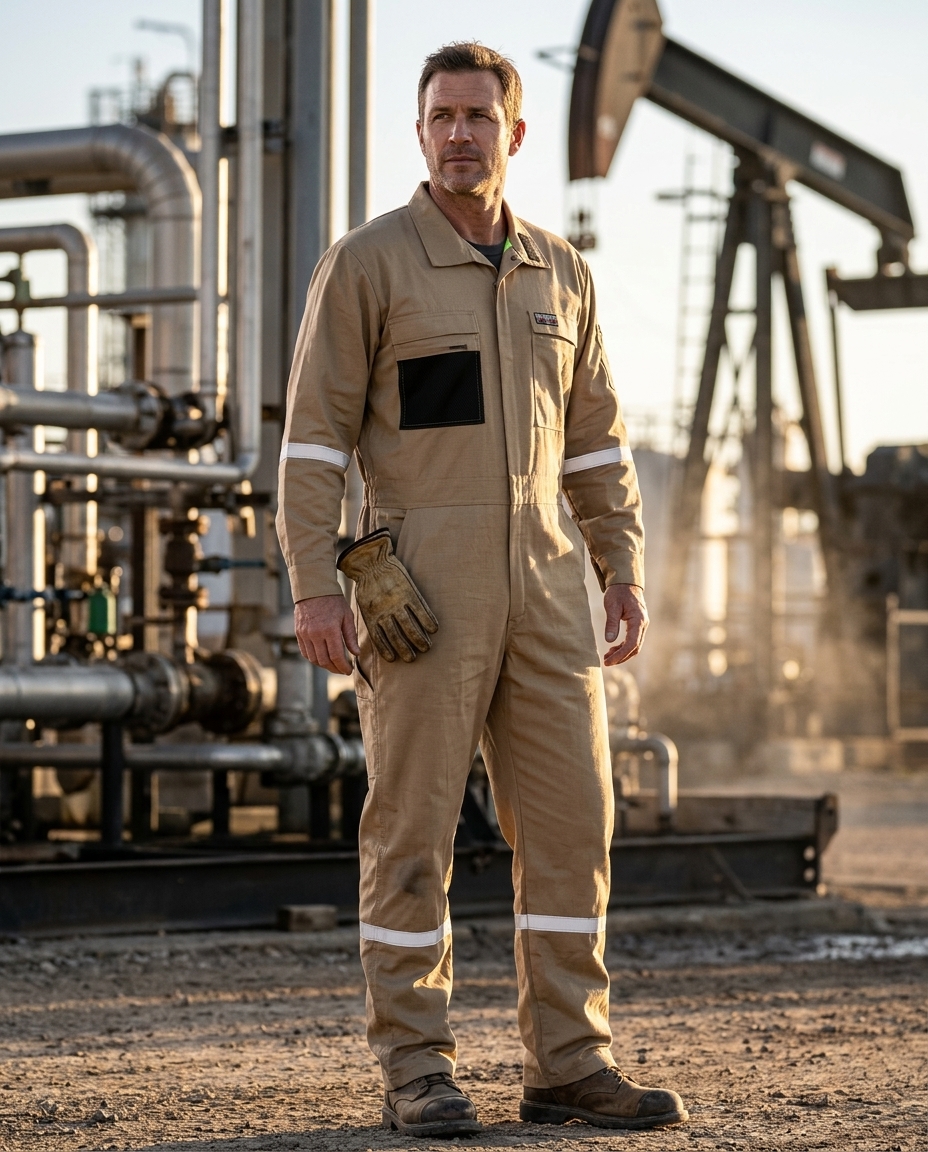
Every flame-resistant garment on the market falls into one of two buckets: inherent FR or treated FR. Both pass the same lab tests. Both can keep your crew safe. But they age very differently.
Inherent FR — protection that is part of the fiber
Inherent FR fabrics use fibers whose flame resistance is built into the polymer chain itself. The protection does not wash out, will not wear out from abrasion, and cannot be stripped by the wrong detergent. You literally cannot launder it away.
Examples on our line: Summit Breeze®, Summit Performance® inherent blend ripstop. These are the garments that specify "no chemical treatment" on the tech sheet.
Treated FR — a finish applied to a base fabric
Treated FR starts as a regular cotton (or cotton blend) and is treated with a flame-retardant chemistry. The protection is real — garments pass NFPA 2112 out of the box — but the treatment has a finite life. Each wash cycle slightly degrades the finish, and the laundry program you run dramatically affects how long the protection lasts.
Examples on our line: Summit Breeze® FR cotton, Summit Performance® FR cotton. These garments have a documented wash-cycle rating (typically 100 industrial or 50 home cycles) before the protection begins to fall off the spec.
What that means in practice
If you run a corporate FR program with industrial laundering, predictable replacement cycles, and a Centralized Garment Issue (CGI) room, treated FR is a fit. You track the wash count on every garment and retire them at the cycle limit.
If your crew washes at home, takes their garments on travel, or runs an unpredictable wash schedule, inherent FR is the safer bet. They cannot ruin it on accident.
The honest tradeoff
An inherent FR garment typically costs more up front — a couple of dollars per piece at retail, more at the program level. Treated FR is cheaper to buy and easier to fit into a cycle-managed program. The math depends on your operation.
What we tell most crews: start with inherent for the high-exposure roles (coveralls on the rig floor, shirts on energized work) and use treated FR where the laundry chain is tight.